
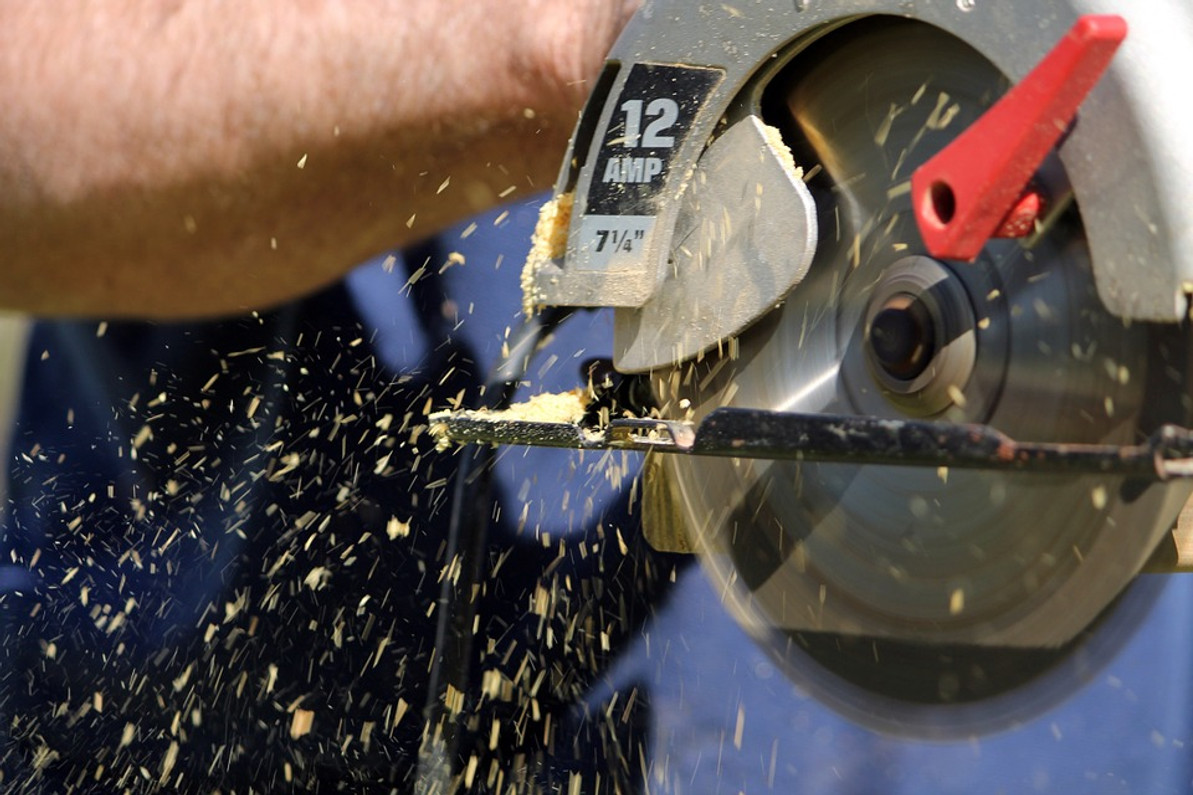
How to Choose a Circular Saw
Are you looking to buy a circular saw? Not to be confused with a reciprocating saw, it's a versatile cutting tool. Circular saws live up to their namesake by featuring a circular blade. As the blade rotates, it will cut through the workpieces with which it's used. Below are several tips to follow when choosing a circular saw.
Corded vs Cordless
There are corded circular saws, and there are cordless circular saws. Corded circular saws are powered by exclusively by electricity. You can connect a corded circular saw to a wall outlet, after which you can turn it on. Cordless circular saws, on the other hand, are powered by either electricity or gas. Most cordless circular saws use a rechargeable battery. Nonetheless, some of them run on gas.
Motor Alignment
You should consider the motor alignment when choosing a circular saw. All circular saws have a motor. The position of the motor in relation to the blade, though, may vary. There are worm-drive circular saws that feature the motor in line with the blade. On the other hand, there are sidewinder circular saws that feature the motor next to the blade. Worm-drive circular saws are typically more powerful, but sidewinder circular saws are easier to turn and move.
Depth Adjustments
Something else to consider when choosing a circular saw is depth adjustments. Most circular saws support depth adjustments. You can adjust the depth at which the blade sits. For a deeper cut, you can lower the blade. For a shallower cut, you can raise the blade. With that said, different circular saws support different levels of blade depth. Therefore, you should consider the depth adjustments when choosing a circular saw.
Guard
Don't forget to check for a guard. As powered cutting tools, most circular saws have a guard. The guard is a shield that sits around the blade. It's designed to protect you from accidentally cutting yourself when using the circular saw. If a circular saw doesn't have a guard -- or if the guard is incomplete -- you should choose a different circular saw. Never use a circular saw unless it has a proper and complete guard around the blade.
Foot Plate
Along with a guard, you should check for a foot plate when choosing a circular plate. A foot plate is a feature that will stabilize the circular saw during use. With a foot plate, the circular saw will remain steady. The end result is cleaner cuts and a lower risk of bodily injury.
Recent Posts
-

Road Cones: How to Choose the Right Ones for Workplace Safety
Road cones help safety teams separate people, vehicles, equipment, and changing work areas. The righ …Oct 28th 2026 -

Buying and Using Safety Harness Inspection Checklist at Work
A safety harness inspection checklist helps workplace teams identify visible damage, confirm equipme …Oct 26th 2026 -

Drum Spill Containment Pallet: a decision guide for employers
A drum spill containment pallet helps a workplace collect leaks or spills beneath stored drums inste …Oct 26th 2026